The city
Chongqing's two rivers
Where the Yangtze and Jialing meet in Chongqing, why the city climbs its hills, and how the rivers connect Ciqikou, Hongya Cave and the Chongqing 1949 show.
Book the Chongqing 1949 show ↗Quick answer
Chongqing sits where the Jialing River joins the Yangtze, and its central area is built on mountains partly surrounded by the two rivers. Ciqikou, home of the Chongqing 1949 theatre, is on the Jialing's west bank, and Hongya Cave, a stilt-style riverside complex, is on its southern bank. The rivers explain both the port town and the night views.
Where the rivers meet
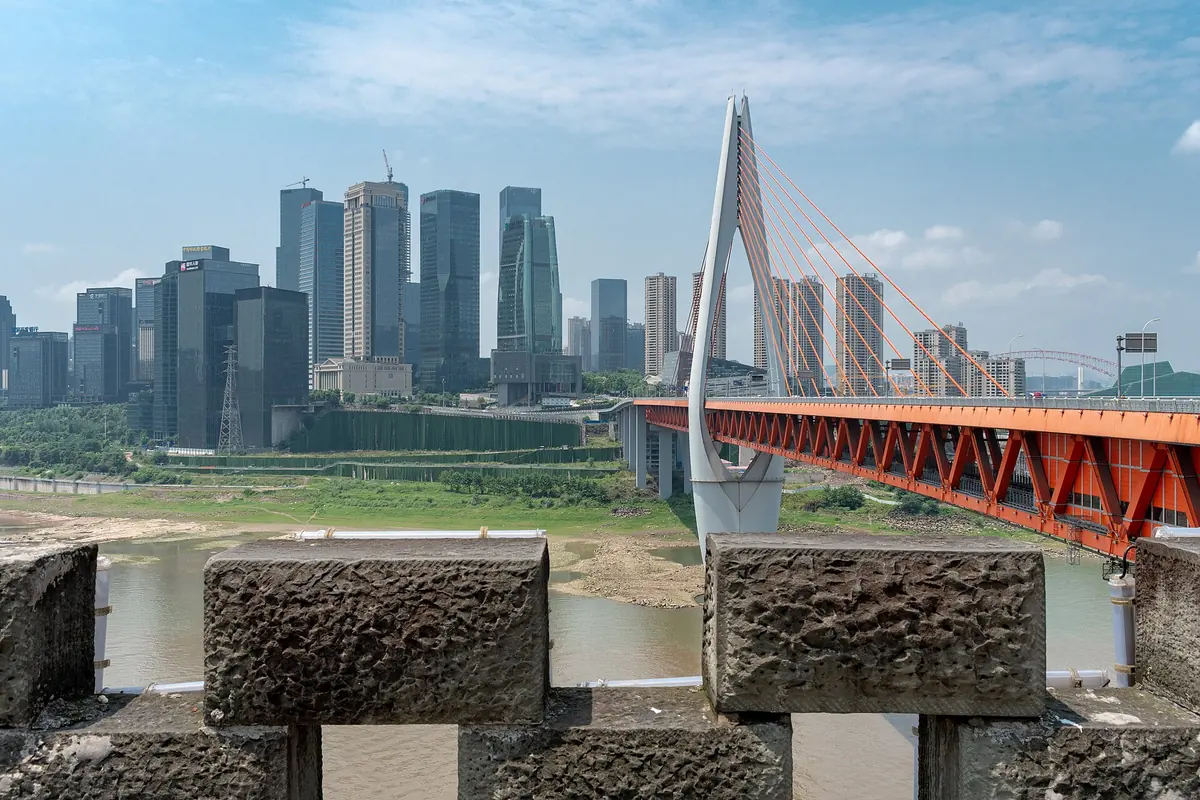
Wikipedia says the Yangtze runs through the whole Chongqing area from west to east and that the Jialing River joins it in Chongqing. The central urban area, in the article's words, is built on mountains and partially surrounded by the Yangtze and Jialing rivers. The rivers and the hills together shape the city's skyline, and they are the reason a river port such as Ciqikou could grow so close to the centre.
A city on a hillside
Wikipedia says mountains roughly form the eastern and western boundaries of Chongqing's urban area. It also says the city is known as the Fog City, because thick fog covers it for part of the year, mostly in spring and autumn. Fog is part of the city's character, so the weather on your evening can change how the riverfront looks. If you are planning photographs of the lit hillsides, keep a second evening in reserve.
The Jialing River
The Jialing is a major tributary of the Yangtze in the Sichuan Basin. Wikipedia says it continues in a sinuous route into Chongqing and its junction with the Yangtze, and that shipping guilds in Chongqing dealt with Jialing shipping. The Jialing therefore carried trade into the city for a long time, which is the background to the port town of Ciqikou on its west bank, and to the ship that rises on the stage in the Chongqing 1949 show.
A wartime capital
Wikipedia says Chongqing served as the wartime capital of the Republic of China during the Second Sino-Japanese War, and that the Kuomintang used it as its capital until late 1949. Those years are the setting of the Chongqing 1949 show, which is set on the eve of the city's liberation, and they explain why Chongqing still has so many historic sites to visit by day. The show is one way into that history, and a museum visit is another.
Hongya Cave on the Jialing
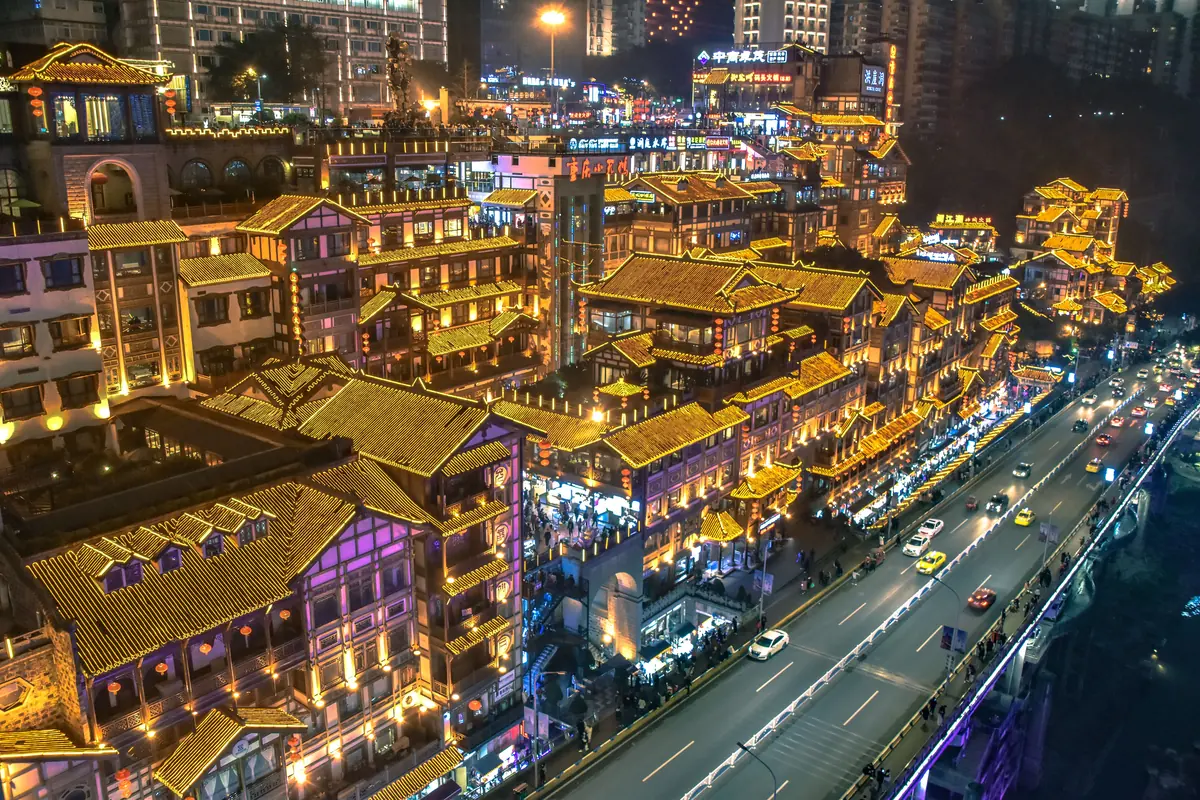
Hongya Cave, also called Hongyadong, is a stilt-style building complex in the Jiefangbei commercial district, according to Wikipedia. It comprises structures built into the hillside along the southern bank of the Jialing River, in the style of Bayu stilted houses. It is a different place from the theatre in Ciqikou, but it shows the stilted architecture that the show's wooden sets recall, and it is one of the city's best-known sights after dark.
Putting it together
A good evening in Chongqing lets the rivers do the framing. Ciqikou is the old port on the west bank, where the show's first set recalls the wharf, and the ticket text says the story's ship sets sail on the Jialing River. Hongya Cave is the lit hillside across the river in the city centre. The show itself runs for about 75 minutes, and the calendar lists the start times, so choose your date first and fit the river views around it. Leave time to travel between the two banks, since the theatre and the city-centre riverfront are in different districts.
Read next: Ciqikou before the show
Frequently asked questions
Which river is Ciqikou on?
The Jialing River, on its west bank, according to Wikipedia. The Jialing joins the Yangtze in Chongqing.
Why is Chongqing called the Fog City?
Wikipedia says thick fog covers the city for part of the year, mostly in spring and autumn.
Is Hongya Cave near the theatre?
No. Hongya Cave is on the Jialing's southern bank in the Jiefangbei district. The theatre is in Ciqikou, in Shapingba District.
Sources